Showing posts with label Global Competitiveness Index. Show all posts

Wednesday, September 27, 2017

Pakistan Shows Impressive Improvements on Global Competitiveness Index of the World Economic Forum. Global Competitiveness Report 2017-2018 Ranks Pakistan at 115 Among 137 Countries


Pakistan at 115, Improves Seven Ranks on the World Economic Forum’s Global Competitiveness Report 2017-2018

Pakistan improves seven ranks on the Global Competitiveness Index of the World Economic Forum. For the ninth consecutive year, Switzerland ranks as the most competitive economy in the world, United States and Singapore ranks at second and third respectively.


Islamabad/Geneva, Switzerland, 27 September 2017 – Pakistan has shown impressive performance and extraordinary recovery on key competitiveness indicators. The country has been successful in strengthening and improving its institutions and macroeconomic framework, showing stability and improvements to its global competitiveness footing.
The report is an annual assessment of the factors driving countries’ productivity and prosperity. the World Economic Forum defines competitiveness as the set of institutions, policies and factors that determine the level of productivity of a country, GCI scores are calculated by drawing together country-level data covering 12 categories – the pillars of competitiveness – that collectively make up a comprehensive picture of a country’s competitiveness.

Drawing on data going back 10 years, the report highlights in particular three areas of greatest concern. These include the financial system, where levels of “soundness” have yet to recover from the shock of 2007 and in some parts of the world are declining further. This is especially of concern given the important role the financial system will need to play in facilitating investment in innovation related to the Fourth Industrial Revolution.

Pakistan’s ranking at 115 is measured by the twelve pillars of Competitiveness. On the institutions pillar, Pakistan improved 21 ranks and stands at 90 from 111 last year. Infrastructure improved from 116 to 110, on the Macroeconomic Stability Pillar Pakistan improved 10 ranks and stands at 106.

On other pillars, among 137 countries, Pakistan ranks at Health and Primary Education 129, losing one rank from last year, Higher Education and Training improved from 123 to 120, Goods Market Efficiency 107, Labour Market Efficiency 128, Financial Market Development jumped from 107 to 96, Technological Readiness 111. Maintaining the regional competitiveness edge Pakistan ranks at 28 on the pillar of Market Size. Also showing sustained improvements on Business Sophistication the rank changed from 95 last year to 81 in 2017, while on the Innovation pillar an impressive improvement of 15 points now places Pakistan at 60 rank on the global competitiveness index. 

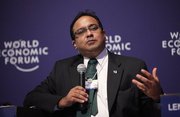
Amir Jahangir, Chief Executive Officer of Mishal Pakistan, the Country Partner Institute of the Global Competitiveness andBenchmarking Network of the World Economic Forum said, “Pakistan is classified as a factor driven economy, which primarily depends on improving its institutions, infrastructure, macroeconomic stability, health and primary education indicators. Pakistan has managed to resist the global crisis and has shown resilience for economic recovery. Globally countries that are competitive have shown resilience to crisis. However, the reforms agenda still remains an unfinished business”. He further said, “this year the Report also shows performance of the political government and its ability and understanding to address the competitiveness challenges.”  He also said, “the country needs to concentrate on its primary health and education to benefit from the demographic dividend it offers”. With the convergence of data and policy, Pakistan has huge potential to make an impact of globally policy making for sustainable development initiatives.


This year among 114 global competitiveness indicators, Pakistan showed improvements on 82 key indices, whereas on 20 indices the country lost its previous position. While on 12 indices Pakistan, retained its position as last year.

Competitiveness has improved across most countries in South Asia, in particular in the two Himalayan countries of Bhutan (82nd, up 15) and Nepal (88th, up 10). On a similarly positive trend, Pakistan (115th, up seven) and Bangladesh (99th, up seven) have both improved their scores across all pillars of competitiveness. Both India (40th, down one) and Sri Lanka (85th, down 14 ranks) had corruption and inefficient government bureaucracy as key factors for hindering progress. Upgrading ICT infrastructure and increasing ICT use remain among the biggest challenges for the region: over the past decade, South Asia has been the area where technological readiness stagnated the most.


The analysis from Mishal, the country partner institute for Pakistan also shows performance of some of the key regulatory bodies and other government institutions, which have shown progress as well. Among 138 countries the institutions are ranked as following: Intellectual Property Organization (97), Judicial Independence (80), Police Services (116), Auditor General of Pakistan Revenues (110), National Highways Authority (76), Pakistan Railways (52), Civil Aviation Authority (91), NEPRA (115), Higher Education Commission of Pakistan (116), National Vocational and Technical Training Commission (99), Competition Commission of Pakistan (70), Pakistan Customs (93), State Bank of Pakistan among other 138 Central Banks at (89), Securities and Exchange Commission of Pakistan at (91) and Trade Development Authority of Pakistan (135).


The Global Competitiveness Report 2017-2018 also identifies Corruption as the most problematic factor for doing business in Pakistan, followed by tax rates, government instability/coups and crime and thefts. 


To improve the soft-data on Pakistan, the World Economic Forum worked closely with Mishal Pakistan, the country partner institute of the Global Competitiveness and Benchmarking Network of WEF. This year a total of 526 respondents from the business community were reached out through the annual Executive Opinion Survey, whereas 236 were selected from last year and 290 from this year. The World Economic Forum reached out to more than 12,000 business leaders globally. This year Pakistan had the third largest sample size in the world after China and Mexico.

“Global competitiveness will be more and more defined by the innovative capacity of a country. Talents will become increasingly more important than capital and therefore the world is moving from the age of capitalism into the age of talentism. Countries preparing for the Fourth Industrial Revolution and simultaneously strengthening their political, economic and social systems will be the winners in the competitive race of the future,” said Klaus Schwab, Founder and Executive Chairman, World Economic Forum.

Another key finding is that competitiveness is enhanced, not weakened, by combining degrees of flexibility within the labour force with adequate protection of workers’ rights. With vast numbers of jobs set to be disrupted as a result of automation and robotization, creating conditions that can withstand economic shock and support workers through transition periods will be vital.

The Report states that, “Despite positive development, leaders are facing major predicaments when it comes to economic policy. Uneven distribution of the benefits of economic progress, generational divides, rising income inequality in advanced economies, and increasing environmental degradation have heightened the sense that the economic policies of past years have not served citizens or society well. Coupled with growth rates that remain below historical levels, these quandaries put many prevalent models of economic growth and related policies into question. Major technological disruption and the new fault lines emerging in the global economic and political order add further uncertainty about the types of policies that will make economies future-proof. Taken together, all of these factors are challenging decision makers to find new approaches and policies to advance economic progress.”

The report also highlights on why quantitative easing and other monetary policy measures have been insufficient in reigniting long-term growth for the world’s advanced economies. The report finds that interventions by economies with comparatively low GCI scores failed to generate the same effect as those performed in economies with high scores, suggesting that strong underlying competitiveness is a key requirement for successful monetary stimulus.

The report offers insight into how priorities may be shifting for nations in earlier stages of development. While basic drivers of competitiveness such as infrastructure, health, education and well-functioning markets will always be important, data in the GCI suggests that a nation’s performance in terms of technological readiness, business sophistication and innovation is now as important in driving competitiveness and growth.

The Global Competitiveness Report’s competitiveness ranking is based on the Global Competitiveness Index (GCI), which was introduced by the World Economic Forum in 2005. The 12 pillars of Competitiveness are: institutions, infrastructure, macroeconomic environment, health and primary education, higher education and training, goods market efficiency, labour market efficiency, financial market development, technological readiness, market size, business sophistication, and innovation.


Key Findings:
  • TEN YEARS AFTER THE CRISIS, THE FINANCIAL SECTOR IS STILL VULNERABLE 
  • MORE COUNTRIES ARE ABLE TO INNOVATE, BUT THEY MUST DO MORE TO SPREAD THE BENEFITS
  • THERE NEED BE NO TRADE-OFF BETWEEN LABOR MARKET FLEXIBILITY AND WORKERS’ RIGHTS
  • Access full report, infographics, videos and more visit: weforum.org

Wednesday, September 30, 2015

Pakistan Shows Improvements on the Global Competitiveness Report 2015 – 2016 of the World Economic Forum.

Pakistan Shows Improvements on the Global Competitiveness Report 2015 – 2016 of the World Economic Forum.GCR 2015 - 2016

Pakistan showcases improvements of three ranks by attaining the ​position of 126, as compared to 129 in 2014 among 140 countries. (Pakistan's Scorecard on GCR 2015 - 2016)

The Government fails to improve regulatory bodies for more effective and efficient governance in the country.

Corruption tops as the most problematic factor for doing business in Pakistan.

A failure to embrace long-term structural reforms that boost productivity and free up entrepreneurial talent is harming the global economy’s ability to improve living standards, solve persistently high unemployment and generate adequate resilience for future economic downturns, according to The Global Competitiveness Report 2015-2016, which is released today.

The report is an annual assessment of the factors driving productivity and prosperity in 140 countries. This year’s edition found a correlation between highly competitive countries and those that have either withstood the global economic crisis or made a swift recovery from it. The failure, particularly by emerging markets, to improve competitiveness since the recession suggests future shocks to the global economy could have deep and protracted consequences.

Pakistan has shown resilience in improving macro-economic indicators in the basic requirement pillars, while the pillars for efficiency enhancers, innovation and sophistication have shown weaknesses over the last one-year.

AJ Profile Picture 2013
Amir Jahangir
“The gains have been significant, however institutional weaknesses have hampered Pakistan’s progress to achieve its true potential. Most of the institutions have shown deterioration in their performance and ranking except a few”, said Amir Jahangir, Chief Executive Officer, Mishal Pakistan, the Partner Institute of Global Competitiveness and Benchmarking Network, World Economic Forum. .

On the twelve pillars of the Global Competitiveness Index Pakistan scored as following; Institutions 119, Infrastructure 117, Macroeconomic environment 128, Health and primary education 127, Higher education and training 124, Goods market efficiency 116, Labor market efficiency 132, Financial market efficiency 99, Technological readiness 113, Market size 28, Business sophistication 86 and Innovation 89

The government has been successful in improving the burden of government regulation from 103 in 2014 to an impressive 86 in 2015. Pakistan also improved the general government budget balance as percentage of the GDP by improving 28 ranks and securing 106th position.

While the indicators for quality of education system (75) has improved, availability of Internet access in schools has deteriorated to 103 this year from 89 in 2014. This signifies the widening gap between multiple education systems prevailing in the country.

Pakistan also benefited from its 3G and 4G rollout in the telecommunication sector, where the country improved on foreign direct investment and technology transfer indicator by 13 ranks and sits at 77 rank among 140 countries. Similarly the indicator for government’s procurement of advanced tech products has shown an improvement on 46 ranks, from 98 in 2014 to 52 in 2015.

​Figure 1: Pakistan's performance on the Global Competitiveness Index 2015 - 2016 of WEF

​Figure 1: Pakistan's performance on the Global Competitiveness Index 2015 - 2016 of the World Economic Forum

The Judicial independence has lost its ranking of 67 last year to 82 in 2015. The governments have shown greater favoritism in decisions of government officials ranking at 101 this year, where Pakistan lost 26 ranks.

Under the goods market efficiency Pakistan lost solid 16 ranks, where the extent of market dominance, which measures the characteristic of corporate activities has gone from 71 in 2014 to 110 in 2015. Similarly the performance of the Competition Commission of Pakistan’s effectiveness of anti-monopoly policy has gone from bad to worst 85 in 2014 to 106 in 2015. Similarly the performance of the Federal Bureau of Revenue (FBR) has also been on the decline, with major indicators showing poor performance over the last year; burden of customs procedures has been ranked at 111 this year as compared to 87 in 2014.

Similarly the various regulatory bodies have shown weak governance indicators, losing ranks to other emerging markets. The Accountant General of Pakistan on the strength of accounting and reporting strength has gone from the rank of 90 in the last year to 117 in 2015. The Securities and Exchange Commission of Pakistan, which gained success in the last few years has proved to be weak and ineffective for the last one year, as it lost 42 ranks, SECP ranks now at 93 as compared to 71 in 2014 among 140 regulators of security exchanges globally.

First place in the GCI rankings, for the seventh consecutive year, goes to Switzerland. Its strong performance in all 12 pillars of the index explains its remarkable resilience throughout the crisis and subsequent shocks. Singapore remains in 2nd place and the United States 3rd. Germany improves by one place to 4th and the Netherlands returns to the 5th place it held three years ago. Japan (6th) and Hong Kong SAR (7th) follow, both stable. Finland falls to 8th place – its lowest position ever – followed by Sweden (9th). The United Kingdom rounds up the top 10 of the most competitive economies in the world.
The Global Competitiveness Index 2015–2016 Rankings

Among the members of the South Asian Association for Regional Cooperation (SAARC) India leads the way at 55th, followed by Sri Lanka (68th, up five). Nepal (100th, up two), Bhutan (105th, down two), Bangladesh (107th, up two), and Pakistan (126th, up three) all rank 100th or below. Although last year all SAARC countries except Bhutan posted small gains, since 2007 only Nepal has managed to progress significantly (14 places gained); Pakistan lost 34 places during that period and India, despite leapfrogging 16 places this year, still ranks seven notches lower than it did in 2007.

Competitiveness
Competitiveness
The report’s Global Competitiveness Index (GCI) also finds a close link between competitiveness and an economy’s ability to nurture, attract, leverage and support talent. The top-ranking countries all fare well in this regard. But in many countries, too few people have access to high-quality education and training, and labour markets are not flexible enough.

The Global Competitiveness Report 2015–2016 is being launched at a pivotal time for the global economy. On the one hand, economic development is characterized by the “new normal” of higher unemployment, lower productivity growth, and subdued economic growth that could still be derailed by uncertainties such as geopolitical tensions, the future path of emerging markets, energy prices, and currency changes. On the other hand, other recent developments show great promise - the so-called fourth industrial revolution and new ways of consuming such as the sharing economy could lead to another wave of significant innovations that drive growth. At the same time, across countries we are witnessing economic policymaking become increasingly people-centered and embedded in overall societal goals.

The fourth industrial revolution is facilitating the rise of completely new industries and economic models and the rapid decline of
Klaus Schwab
others. To remain competitive in this new economic landscape will require greater emphasis than ever before on key drivers of productivity, such as talent and innovation," said Klaus Schwab, Founder and Executive Chairman of the World Economic Forum.

“The new normal of slow productivity growth poses a grave threat to the global economy and seriously impacts the world’s ability to tackle key challenges such as unemployment and income inequality. The best way to address this is for leaders to prioritize reform and investment in areas such as innovation and labour markets; this will free up entrepreneurial talent and allow human capital to flourish,” said Xavier Sala-i-Martin, Professor of Economics at Columbia University.

Wednesday, September 3, 2014

World Economic Forum Improves Pakistan’s Competitiveness Ranking in 2014-2015 Global Competitiveness Report

World Economic Forum Improves Pakistan’s Competitiveness Ranking.

Securing 129th rank among 144 Economies around the world, Pakistan improves 4 ranks as compared to 2013.


Pakistan has been ranked at 129 out of the 144 economies around the world in the World Economic Forum’s (WEF) Global Competitiveness Report (GCR) 2014 - 2015, released on the 3rd of September 2014 in Geneva.

The Global Competitiveness Report 2014-2015 assesses the competitiveness landscape of 144 economies, providing insight into the drivers of their productivity, innovation and prosperity.

The report findings show that Switzerland tops the overall rankings in the Global Competitiveness Report for the fifth consecutive year. Singapore remains in second position, the United States in third position, and Finland ranked at 4th.  Germany 5, Japan 6, Hong Kong 7, The Netherlands 8, the United Kingdom 9, and Sweden ranked at 10.


The report evaluates that among the South Asia Association for Regional Cooperation (SAARC), Pakistan is the at the last among the SAARC member countries at 129, whereas India is at 71, Sri Lanka at 73, Nepal at 102, Bhutan at 103, Bangladesh at 109. Afghanistan and Maldives have not been included in the report this year. However India and Sri Lanka both lost 11 and 8 points respectively as compared to last year.

“Although Pakistan has shown slight improvements on the Global Competitiveness Index, it is still passing though a difficult time”, said Amir Jahangir, Chief Executive Officer of Mishal Pakistan, the country partner institute of the Global Competitiveness and Benchmarking Network of the World Economic Forum. He further said “Pakistan is facing serious challenges on the economic management side; with a double-digit inflation, very low savings rate of 13.2% of the GDP, general government debt at 63.1% of GDP and the 8% budget deficit gives little room for government to create socio-economic dividends for its citizens”. “Pakistan needs to make competitiveness as part of its growth and stabilization strategy for sustainable development across all factors of economy”, Jahangir said.


This year report consists of three main indexes and 12 pillars. Among 144 economies, Pakistan ranked in basic requirements at 134, in efficiency enhancers at 101 and in innovation and sophistication factors ranked at 83. All the 12 pillars included into the report ranks Pakistan as follows: Institutions are ranked at 123, infrastructure at 119, macroeconomic environment at 137, health and primary education at 129, higher education and training at 127, goods market efficiency at 100, labor market efficiency at 132, financial market development at 72, technological readiness at 114, market size at 30, business sophistication at 81 and innovation at 88.

After two consecutive years of steep decline, Pakistan (129th) remains essentially stable since last year. The country obtains low marks in the most critical and basic areas of competitiveness. Its public institutions (125th) are constrained by red tape, corruption, patronage, and lack of property rights protection. Its security situation remains alarming (142nd). Pakistan is the third least safe countries covered, behind only Yemen and Libya.


Thanks to a lower inflation rate and a smaller budget deficit, the country’s macroeconomic situation improves slightly but nevertheless remains dismissal (137th). Pakistan’s infrastructure (119th) particularly for electricity (133rd) is underdeveloped. Moreover, the country’s performance in terms of health and education is among the worst of all the countries covered. Infant mortality (137th) is the highest outside sub-Saharan Africa, and with one of the lowest enrollment rates in the world (132nd) is the estimated that almost a quarter of children do not go to primary school.

Pakistan’s competitiveness is further penalized by the many rigidities and inefficiencies of its labor market (132nd, up six). Female participation in the labor force is the world’s fifth lowest (140th). The potential for ICTs is not sufficiently leveraged and access to ICTs remain low (114th). On a slightly more positive note, Pakistan does comparatively better in the more advanced areas captured by the Global Competitiveness Index ranking 72nd in the financial development pillar and 81st on the business sophistication pillar.

The most problematic areas in doing business in Pakistan stipulated in the report include corruption as the leading factor, along with, policy instability, access to financing, inefficient government bureaucracy, inflation, inadequate supply of infrastructure, government instability/coups, crime and theft, inadequately educated workforce, tax rates, tax regulations, poor public health and insufficient capacity to innovate. 

The most problematic factors for doing business in Pakistan: Global Competitiveness Report 2014-2015
The World Economic Forum’s Global Competitiveness Report is the most influential ranking of a country’s economic competitiveness and it affects Pakistan’s image in the world among business, governments and financial leaders. The Report series remains the most comprehensive assessment of national competitiveness worldwide.

“The global economy may have exited crisis mode, but the path to sustainable growth remains uncertain,” said Klaus Schwab, Founder and Executive Chairman of the World Economic Forum. “Quality growth is key to reinforcing inclusiveness and it is imperative that leaders act now to underscore prosperity and productivity for the future.”

On the global side the health of the global economy is at risk, despite years of bold monetary policy, as countries struggle to implement structural reforms necessary to help economies grow. In its annual assessment of the factors driving countries’ productivity and prosperity, the report identifies uneven implementation of structural reforms across different regions and levels of development as the biggest challenge to sustaining global growth. It also highlights talent and innovation as two areas where leaders in the public and private sectors need to collaborate more effectively in order to achieve sustainable and inclusive economic development.

The Global Competitiveness Report’s competitiveness ranking is based on the Global Competitiveness Index (GCI), which was introduced by the World Economic Forum in 2004. Defining competitiveness as the set of institutions, policies and factors that determine the level of productivity of a country, GCI scores are calculated by drawing together country-level data covering 12 categories – the pillars of competitiveness – that collectively make up a comprehensive picture of a country’s competitiveness.


Mishal Pakistan is the country partner institute of the Center for Global Competitiveness and Benchmarking Networks of the World Economic Forum. Established in 2003, Mishal has been engaged with key stakeholders in Pakistan to improve the state of competitiveness and media through good governance initiatives and by creating appreciation for data journalism.

The World Economic Forum is an independent international organization committed to improving the state of the world by engaging leaders in partnerships to shape global, regional and industry agendas. Incorporated as a foundation in 1971, and headquartered in Geneva, Switzerland.

Wednesday, March 5, 2014

Mishal to Conduct Nationwide Survey to Measure Pakistan’s Global Competitiveness Ranking for 2014-2015

Mishal to Conduct Nationwide Survey to Measure Pakistan’s Global Competitiveness Ranking for 2014-2015

The World Economic Forum in partnership with Mishal will conduct the Executive Opinion Surveys across Pakistan.

The World Economic Forum in partnership with Mishal Pakistan will conduct the Executive Opinion Survey 2014 in Pakistan beginning in March 2014. 

The Executive Opinion Survey, “The Voice of the Business Community” is a major component of The Global Competitiveness Report and provides the key ingredient that turns the Report into a representative annual measure of a nation’s economic environment and its ability to achieve sustained growth. The Survey gathers valuable information on a broad range of variables for which hard data sources are scarce or nonexistent. High-level business executives operating in Pakistan will be surveyed to capture their opinion on the business environment in which they operate.

The Global Competitiveness Report has been the World Economic Forum’s flagship publication since 1979 and is widely recognized as the world’s leading cross-country comparison of factors affecting economic competitiveness and growth.

A sample of company executives in Pakistan will be asked to complete this important and confidential survey.  Mr. Amir Jahangir, Chief Executive Officer of Mishal Pakistan notes that it is vitally important that each executive sampled complete the survey to ensure that Pakistan has accurate and reliable data in the Report. The report for 2014-2015 is expected to be issues in the Q4 of 2014.


Established in 2003, Mishal Pakistan is the Partner Institute of the Global Competitiveness & Benchmarking Network, World Economic Forum. As a partner institute Mishal is working on measuring Pakistan’s performance on multiple international indices and reports including the Global Competitiveness Index/Report, Global Gender Gap Index, Global Enabling Trade Index, Global Information Technology Report - Network Readiness Index, Financial Development Index and the Global Travel and Tourism Competitiveness Index.

Wednesday, September 4, 2013

Pakistan slips on the Global Competitiveness Ranking to 133 in 2013-14


Pakistan fails to address its security challenges and business risks - slipping competitiveness ranking to 133.

Institutions and innovation increasingly important for competitiveness


Excellent innovation and strong institutional environments are increasingly influencing economies’ competitiveness, according to The Global Competitiveness Report 2013-2014.

“Innovation becomes even more critical in terms of an economy’s ability to foster future prosperity,” said Klaus Schwab, Founder and Executive Chairman of the World Economic Forum. “I predict that the traditional distinction between countries being ‘developed’ or ‘less developed’ will gradually disappear and we will instead refer to them much more in terms of being ‘innovation rich’ vs. ‘innovation poor’ countries. It is therefore vital that leaders from business, government and civil society work collaboratively to create education systems and enable environments which foster innovation.”

Amir Jahangir, Chief Executive Officer of Mishal Pakistan, a partner institute of the WEF, in his findings said that “Pakistan needs to focus on competitiveness or the economy can slide into a dangerous downward spiral. The road to economic recovery will be difficult if Pakistan fails to address its security challenges and business risks.”


Pakistan has slipped down to 133 rank among 148 countries on the Global Competitiveness Index of the World Economic Forum, announced in the Global Competitiveness Report 2013-14. Pakistan was ranked at 124 in 2012-13 and 118 in 2011-12.

The gradual slipping of Pakistan’s rank shows weakening of its institutions and capacity of the economy to create space for innovation. The areas of public and private partnerships for cooperation for improving competitiveness are also diminishing as well. This indicates increasing mistrust between the public and the private sector due to increase corruption and policy instability issues.

The report has included the views of more than 14000 business leaders globally to measure the competitiveness of 148 countries. More than 200 business leaders in Pakistan, identified corruption as the most problematic factor for doing business, followed by policy instability, access to financing, inadequate supply of infrastructure, inefficient government bureaucracy and high inflation as some of the areas identified in the GCR.

Pakistan has lost on almost all indicators of the Global Competitiveness Index (GCI); an in-depth analysis on each pillar has been discussed below:

1st Pillar: Institutions

The Global Competitiveness Report 2013-14 shows that, Pakistan has shown poor performance on governments’ use of diversion of public funds from 76 in 2012 to 103 in 2013. It further states that the wastefulness in government spending has also increased and the rankings have dropped from 96 last year’s to 116 this year. Similarly the burden of government regulation has also deteriorated from 62 to 82 in 2012 and 2013 respectively. The efficiency of legal framework in challenging regulations, which means, how easy is it for private businesses to challenge government actions and/or regulations through the legal system has fallen 11 points since last year and ranks at 108 this year. This depicts a SRO culture has been prevalent in the country for economic decision making instead of legislations through legal frameworks.

The businesses in Pakistan has also shown reluctance in improving the efficacy of corporate boards by fallen to 123 in 2013 from 111 in 2012. However the regulator on the securities market has shown improvements in terms of and protection of minority shareholders’ interest from 83 in 2012 to 73 this year. Pakistan has maintained its competitiveness advantage in the region by securing the rank at 31 this year.

The biggest impact on the pillar of institutions has been due to law and order and Pakistan’s fight in the war on terror, where Pakistan ranks among the least 10 in the world; business cost of terrorism 144, business cost of crime and violence 138 and organized crime 141 among 148 countries globally. Pakistan has shown improvements on judicial independence, improving from 57 to 55.

2nd Pillar: Infrastructure

The overall infrastructure in the country has deteriorated from last year, where Pakistan stands at 119 as compared to 105 last year among 148 countries. Quality of air transport (88) lost 10 points this year, however the scheduled available airline seat kilometers per week originating in country is where Pakistan has a competitiveness advantage securing 46 out of 148 countries, this depicts the governments policy to open airspace to airlines however poor performance at the part of the Civil Aviation Authority in Pakistan.

3rd Pillar: Macroeconomic Environment

Government’s budget balance % of GDP has fallen to an alarming 138 place as compared to 125 last year; similarly the gross national savings has also dropped to 125 from 107 in 2013 and 2012 respectively.

4th Pillar: Health and Primary Education  

Although Pakistan has lost five points on the Health and Primary Education pillar from 117 in 2012 to 128 in 2013, the country has been successful in improving its ranking on business impact of tuberculosis 120 to 114, business impact of HIV/AIDS 106 to 97 and HIV prevalence as percentage of population 12 to 11 in 2012 to 2013 respectively.

5th Pillar Higher Education and Training

Pakistan showed improvements on the tertiary education enrolment indicator, where it moved to 121 this year from 125 in the last year. While the quality of Math and Science education dropped to an alarming 104 in 2013 from 88 in 2012, the extent of staff training has gone from bad to worst this year by securing the rank of 128.

6th Pillar: Good Market Efficiency

On goods market efficiency pillar, the extent of market dominance has lost 12 points from 65 to 77, the effectiveness of the anti-monopoly policy has decreased from 75 to 85 and the effect of taxation on incentives to investment from 72 to 82 in this year.

The buyer sophistication has also declined from 78 to 88 in 2013, indicating a more price conscious business environment instead of quality, thus creating more space for imports from other countries for large consumptions.

The intensity of local competition has improved ranking from 85 to 79 this year, in addition to improving prevalence of trade barriers from 114 from 92 this year. However the country was successful to improve the extent of rules and regulations to encourage or discourage foreign direct investments, thus improving the business impact of rules on FDI and securing the 75 rank this year as compared to 96 last year.

7th Pillar: Labor Market Efficiency

Labor Market Efficiency pillar has shown insights into the human resource face of the economy, the cooperation in labor-employer relations have worsened in the last one year from 90 to 105, similarly, the hiring and firing practices have slipped down from 21 to 35 this year, although keeping a competitiveness advantage in the region. The pay and productivity indicator has also fallen from 73 in 2012 to 86 in 2013.  Pakistan is also among the worst countries to include women in its workforce, ranked at 144 among the 148 countries.

8th Pillar: Financial Market Development

Both the financial market regulators have shown great improvements, while the incumbent regulator of the securities market, the Securities and Exchange Commission of Pakistan has shown significant improvements this year, improving seven points and securing the rank of 48 on the regulations of securities exchanges from 55 last year; the State Bank of Pakistan has also shown solid improvements in the soundness of the banking sector in the country. Improving to 71 this year to 85 in the last year. However this gain has not able to improve the constantly declining the state of venture capital in Pakistan, slipping down to 77.

9th Pillar: Technological Readiness  

Pakistan has shown significance gains on the technical readiness pillar, with the availability of latest technologies (79), firm-level technology absorption (81). Improvements in the international Internet bandwidth has been a catalyst for businesses to move towards a more knowledge-based economy, with ranks gaining from 108 last year to 101 this year. While the mobile broadband subscriptions per 100 population has fallen from 121 to 126.

10th Pillar: Market Size

Pakistan is maintaining its regional competitiveness advantage on the domestic market size index at 27

11th Pillar: Business Sophistication

The businesses have shown restrain on delegation of authority, shown corporate insecurity from large investors to professional managements, especially in the family owned businesses, the rank fell from 94 in 2012 to 122 in 2013.

12th Pillar: Innovation

Pakistan has shown improvements on capacity for innovation by improving 11 points and securing regional competitiveness advantage at 49. While the quality of scientific research institutions 75 and company spending on research and development 75 have been on the loss. The university-industry collaboration for research and development has been declined from 81 to 98, making industry depend on replicating instead of creating new products and services. 

The report’s Global Competitiveness Index (GCI) places Switzerland at the top of the ranking for the fifth year running. Singapore and Finland remain in second and third positions respectively. Germany moves up two places (4th) and the United States reverses a four-year downward trend, climbing two places to fifth. Hong Kong SAR (7th) and Japan (9th) also close the gap on the most competitive economies, while Sweden (6th), the Netherlands (8th) and the United Kingdom (10th) fall. 

The United States continues to be a world leader in bringing innovative products and services to market. Its rise in the ranking is down to a perceived improvement in the country’s financial market as well as greater confidence in its public institutions. However, serious concerns persist over its macroeconomic stability, which ranks 117 out of 148 economies.

Among the Asian economies, Indonesia jumps to 38th, making it the most improved of the G20 economies since 2006, while Korea (25th) falls by six places.  Behind Singapore, Hong Kong SAR, Japan and Taiwan (China) (12th) all remain in the top 20. Developing Asian nations display very mixed performances and trends: Malaysia places 24th while countries such as Nepal (117th), Pakistan (133rd) and Timor-Leste (138th) are near the bottom of the ranking. Bhutan (109th), Lao PDR (81st) and Myanmar (139th) join the index for the first time. 

Xavier Sala-i-Martin, Professor of Economics, Columbia University, USA, said: “The report highlights a shift in the narrative of the global economy from one year ago, when fire-fighting still characterized much of global and regional economic policy. This has now given way to an increasing urgency for leaders to make wide-ranging structural reforms to their economies.