Showing posts with label Amir Jahangir. Show all posts

Wednesday, October 9, 2019

Pakistan slips 3 ranks on the Global Competitiveness Report 2019 of the World Economic Forum, secures 110 position among 141 countries

Pakistan slips 3 ranks on the Global Competitiveness Report 2019 of the World Economic Forum, secures 110 position among 141 countries

  • Islamabad, PK – 09 October 2019 - The World Economic Forum released the Global Competitiveness Report 2019 today. The Report has adopted a new methodology for measuring Competitiveness 4.0. by including indices which represents more knowledge and digital-based ecosystems. The Global Competitiveness Index (GCI) 4.0 provides a detailed map of the factors and attributes that drive productivity, growth and human development in the era of the Fourth Industrial Revolution. The 2019 edition covers 141 economies, which account for 99% of the world’s GDP.
No alt text provided for this image
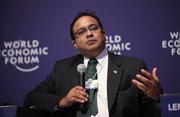
Amir Jahangir at the Launch of the Global Competitiveness Index 2019 Report and Pakistan's Performance on Competitiveness 4.0
The World Economic Forum defines competitiveness as the set of institutions, policies and factors that determine the level of productivity of a country. Countries can improve their investment potentials by improving their competitiveness rankings. The Global Competitiveness Report, which in 2018 used a brand new methodology to fully capture the dynamics of the global economy in the Fourth Industrial Revolution, many of the factors that will have the greatest impact in driving competitiveness in the future have never been the focus of major policy decisions in the past. These include idea generation, entrepreneurial culture, openness, and agility. The new tool maps the competitiveness landscape of 141 economies through 103 indicators organized into 12 pillars.

Amir Jahangir, Chief Executive Officer of Mishal Pakistan and the Country Partner Institute of the Future of Economic Progress System Initiative, World Economic Forum, said, “Pakistan needs to bridge the digital divide between citizens demand for governance and governments’ ability to deliver services through digital and e-governance platforms. The public policy agenda should have ICT adoption as one of the key drivers for transforming the economy to succeed in the fourth industrial revolution era.”

On the Competitiveness 4.0, Pakistan has been ranked at 110th among 141 economies, slipping three positions below from last year’s 107. Pakistan has been ranked 107 in Institutions as compared to 109 last year, It is ranked 105 in infrastructure against 93 in 2018, The ICT adoption has slipped to 131 from 127 from a year earlier. With a loss of 13 ranks the Macroeconomic stability at 116 has greatly impacted country’s competitiveness rankings, While the Health pillars at 115 in 2019 has slipped from 109 from last year. The Skills pillar has retained its position as last year at 125. Pakistan has also lost 4 ranks on the Product Market Pillar with global ranking on 126. Pakistan improved its labor market efficiency with one point by securing 120 rank among 141 economies. While the Financial Systems Pillar lost 10 ranks and rests at 99 this year, compared to 89 last years, the country improved its competitiveness advantage by securing an impressive 29 position compared to 31 in 2018. Pakistan showed its best performance on the business dynamism by improving 15 points and securing 52 among 141 economies. This gain was due to Pakistan’s improvements on time to start a business where, it improves several ranks. The country scored 79 on the innovation capability pillar compared to 75 in 2018.
In South Asia, India, in 68th position, loses ground in the rankings despite a relatively stable score, mostly due to faster improvements of several countries previously ranked lower. It is followed by Sri Lanka (the most improved country in the region at 84th), Bangladesh (105th), Nepal (108th) and Pakistan (110th).
The Global Competitiveness Index 4.0 provides a compass for thriving in the new economy of the Fourth Industrial Revolution. In the present context of economic uncertainty, trade tensions, and social and environmental challenges, it is even more critical that policymakers use the comprehensive tools of competitiveness to put the world economy on a path of growing productivity, inclusion and sustainability. The report shows this win-win-win combination is possible, but we will need bolder, visionary leadership and multi-stakeholder collaboration to achieve it,” said Klaus Schwab, Founder and Executive Chairman of the World Economic Forum.
“What is of greatest concern today is the reduced ability of governments and central banks to use monetary policy to stimulate economic growth. This makes it all the more important that competitiveness-enhancing polices are adopted that are able to boost productivity, encourage social mobility and reduce income inequality,” said Saadia Zahidi, Head of the Centre for the New Economy and Society at the World Economic Forum.
The Global Competitiveness Report 2019 highlights the fragile economic foundations of several least developed and emerging economies, making them highly vulnerable to shocks. With extreme poverty reduction decelerating and nearly half of humanity still struggling to meet basic needs, the report is a reminder of the need for sustained, productivity-enhancing economic growth remaining critical for improved living standards.
It has also become evident that policymakers face a choice when it comes to setting the right direction for growth through the “quality” of policies and public investments to proactively address challenges such as inequality, climate change and technological divides. The perceived trade-offs between economic, social and environmental factors may emerge from a short-term and narrow view of growth but can be mitigated by adopting a holistic and longer-term approach to sustainable development.
Singapore is the world’s most competitive economy in 2019, overtaking the United States, which falls to second place. Hong Kong SAR (3rd), Netherlands (4th) and Switzerland (5th) round up the top five. The average across the 141 economies covered is 61 points, almost 40 points to the frontier. This global competitiveness gap is of even more concern as the global economy faces the prospect of a downturn. The changing geopolitical context and rising trade tensions are fuelling uncertainty and could precipitate a slowdown. However, some of this year’s better performers in the GCI appear to be benefiting from the trade feud through trade diversion, including Singapore (1st) and Viet Nam (67th), the most improved country in this year’s Index.
The Report is a reminder to national policymakers to apply a holistic approach and better balance short-term considerations against factors whose impact is felt beyond quarterly results and election cycles. For example, the results of the index show that labour and education policies have not been keeping up with the pace of innovation in most countries, including in some of the largest and most innovative economies. Governments must better anticipate the unintended consequences of technological integration and implement complementary social policies that support populations through the Fourth Industrial Revolution.
Building on four decades of experience in benchmarking competitiveness, the World Economic Forum’s Global Competitiveness Index 4.0 is a composite indicator that assesses the set of factors that determine an economy’s level of productivity – widely considered as the most important determinant of long-term growth. The GCI 4.0 framework is built around 12 main drivers of productivity, or pillars: Institutions, Infrastructure; ICT adoption; Macroeconomic stability; Health; Skills; Product market; Labour market; Financial system; Market size; Business dynamism; and Innovation capability. It comprises 103 individual indicators distributed across the 12 pillars.
The Global Competitiveness Report is a flagship publication of the World Economic Forum’s Platform for Shaping the Future of the New Economy and Society. The Platform provides the opportunity to advancing prosperous, inclusive and equitable economies and societies. It focuses on co-creating a new vision in three interconnected areas: growth and competitiveness; education, skills and work; and equality and inclusion. Working together, stakeholders deepen their understanding of complex issues, shape new models and standards and drive scalable, collaborative action for systemic change.
Over 100 of the world’s leading companies and 100 international, civil society and academic organizations currently work through the Platform to promote new approaches to competitiveness in the Fourth Industrial Revolution economy; deploy education and skills for tomorrow’s workforce; build a new pro-worker and pro-business agenda for jobs; and integrate equality and inclusion into the new economy, aiming to reach 1 billion people with improved economic opportunities.
Mishal Pakistan is Pakistan’s leading strategic communication and design company. It is also the country Partner Institute of the Future of Economic Progress System Initiative, World Economic Forum. Mishal is responsible to generate primary data on more than 100 indicators measuring Pakistan’s competitiveness. Mishal’s foremost domain of activity is behavior change communication, strategic communication with a spotlight on media and perception management.

Wednesday, September 27, 2017

Pakistan Shows Impressive Improvements on Global Competitiveness Index of the World Economic Forum. Global Competitiveness Report 2017-2018 Ranks Pakistan at 115 Among 137 Countries


Pakistan at 115, Improves Seven Ranks on the World Economic Forum’s Global Competitiveness Report 2017-2018

Pakistan improves seven ranks on the Global Competitiveness Index of the World Economic Forum. For the ninth consecutive year, Switzerland ranks as the most competitive economy in the world, United States and Singapore ranks at second and third respectively.


Islamabad/Geneva, Switzerland, 27 September 2017 – Pakistan has shown impressive performance and extraordinary recovery on key competitiveness indicators. The country has been successful in strengthening and improving its institutions and macroeconomic framework, showing stability and improvements to its global competitiveness footing.
The report is an annual assessment of the factors driving countries’ productivity and prosperity. the World Economic Forum defines competitiveness as the set of institutions, policies and factors that determine the level of productivity of a country, GCI scores are calculated by drawing together country-level data covering 12 categories – the pillars of competitiveness – that collectively make up a comprehensive picture of a country’s competitiveness.

Drawing on data going back 10 years, the report highlights in particular three areas of greatest concern. These include the financial system, where levels of “soundness” have yet to recover from the shock of 2007 and in some parts of the world are declining further. This is especially of concern given the important role the financial system will need to play in facilitating investment in innovation related to the Fourth Industrial Revolution.

Pakistan’s ranking at 115 is measured by the twelve pillars of Competitiveness. On the institutions pillar, Pakistan improved 21 ranks and stands at 90 from 111 last year. Infrastructure improved from 116 to 110, on the Macroeconomic Stability Pillar Pakistan improved 10 ranks and stands at 106.

On other pillars, among 137 countries, Pakistan ranks at Health and Primary Education 129, losing one rank from last year, Higher Education and Training improved from 123 to 120, Goods Market Efficiency 107, Labour Market Efficiency 128, Financial Market Development jumped from 107 to 96, Technological Readiness 111. Maintaining the regional competitiveness edge Pakistan ranks at 28 on the pillar of Market Size. Also showing sustained improvements on Business Sophistication the rank changed from 95 last year to 81 in 2017, while on the Innovation pillar an impressive improvement of 15 points now places Pakistan at 60 rank on the global competitiveness index. 

Amir Jahangir, Chief Executive Officer of Mishal Pakistan, the Country Partner Institute of the Global Competitiveness andBenchmarking Network of the World Economic Forum said, “Pakistan is classified as a factor driven economy, which primarily depends on improving its institutions, infrastructure, macroeconomic stability, health and primary education indicators. Pakistan has managed to resist the global crisis and has shown resilience for economic recovery. Globally countries that are competitive have shown resilience to crisis. However, the reforms agenda still remains an unfinished business”. He further said, “this year the Report also shows performance of the political government and its ability and understanding to address the competitiveness challenges.”  He also said, “the country needs to concentrate on its primary health and education to benefit from the demographic dividend it offers”. With the convergence of data and policy, Pakistan has huge potential to make an impact of globally policy making for sustainable development initiatives.


This year among 114 global competitiveness indicators, Pakistan showed improvements on 82 key indices, whereas on 20 indices the country lost its previous position. While on 12 indices Pakistan, retained its position as last year.

Competitiveness has improved across most countries in South Asia, in particular in the two Himalayan countries of Bhutan (82nd, up 15) and Nepal (88th, up 10). On a similarly positive trend, Pakistan (115th, up seven) and Bangladesh (99th, up seven) have both improved their scores across all pillars of competitiveness. Both India (40th, down one) and Sri Lanka (85th, down 14 ranks) had corruption and inefficient government bureaucracy as key factors for hindering progress. Upgrading ICT infrastructure and increasing ICT use remain among the biggest challenges for the region: over the past decade, South Asia has been the area where technological readiness stagnated the most.


The analysis from Mishal, the country partner institute for Pakistan also shows performance of some of the key regulatory bodies and other government institutions, which have shown progress as well. Among 138 countries the institutions are ranked as following: Intellectual Property Organization (97), Judicial Independence (80), Police Services (116), Auditor General of Pakistan Revenues (110), National Highways Authority (76), Pakistan Railways (52), Civil Aviation Authority (91), NEPRA (115), Higher Education Commission of Pakistan (116), National Vocational and Technical Training Commission (99), Competition Commission of Pakistan (70), Pakistan Customs (93), State Bank of Pakistan among other 138 Central Banks at (89), Securities and Exchange Commission of Pakistan at (91) and Trade Development Authority of Pakistan (135).


The Global Competitiveness Report 2017-2018 also identifies Corruption as the most problematic factor for doing business in Pakistan, followed by tax rates, government instability/coups and crime and thefts. 


To improve the soft-data on Pakistan, the World Economic Forum worked closely with Mishal Pakistan, the country partner institute of the Global Competitiveness and Benchmarking Network of WEF. This year a total of 526 respondents from the business community were reached out through the annual Executive Opinion Survey, whereas 236 were selected from last year and 290 from this year. The World Economic Forum reached out to more than 12,000 business leaders globally. This year Pakistan had the third largest sample size in the world after China and Mexico.

“Global competitiveness will be more and more defined by the innovative capacity of a country. Talents will become increasingly more important than capital and therefore the world is moving from the age of capitalism into the age of talentism. Countries preparing for the Fourth Industrial Revolution and simultaneously strengthening their political, economic and social systems will be the winners in the competitive race of the future,” said Klaus Schwab, Founder and Executive Chairman, World Economic Forum.

Another key finding is that competitiveness is enhanced, not weakened, by combining degrees of flexibility within the labour force with adequate protection of workers’ rights. With vast numbers of jobs set to be disrupted as a result of automation and robotization, creating conditions that can withstand economic shock and support workers through transition periods will be vital.

The Report states that, “Despite positive development, leaders are facing major predicaments when it comes to economic policy. Uneven distribution of the benefits of economic progress, generational divides, rising income inequality in advanced economies, and increasing environmental degradation have heightened the sense that the economic policies of past years have not served citizens or society well. Coupled with growth rates that remain below historical levels, these quandaries put many prevalent models of economic growth and related policies into question. Major technological disruption and the new fault lines emerging in the global economic and political order add further uncertainty about the types of policies that will make economies future-proof. Taken together, all of these factors are challenging decision makers to find new approaches and policies to advance economic progress.”

The report also highlights on why quantitative easing and other monetary policy measures have been insufficient in reigniting long-term growth for the world’s advanced economies. The report finds that interventions by economies with comparatively low GCI scores failed to generate the same effect as those performed in economies with high scores, suggesting that strong underlying competitiveness is a key requirement for successful monetary stimulus.

The report offers insight into how priorities may be shifting for nations in earlier stages of development. While basic drivers of competitiveness such as infrastructure, health, education and well-functioning markets will always be important, data in the GCI suggests that a nation’s performance in terms of technological readiness, business sophistication and innovation is now as important in driving competitiveness and growth.

The Global Competitiveness Report’s competitiveness ranking is based on the Global Competitiveness Index (GCI), which was introduced by the World Economic Forum in 2005. The 12 pillars of Competitiveness are: institutions, infrastructure, macroeconomic environment, health and primary education, higher education and training, goods market efficiency, labour market efficiency, financial market development, technological readiness, market size, business sophistication, and innovation.


Key Findings:
  • TEN YEARS AFTER THE CRISIS, THE FINANCIAL SECTOR IS STILL VULNERABLE 
  • MORE COUNTRIES ARE ABLE TO INNOVATE, BUT THEY MUST DO MORE TO SPREAD THE BENEFITS
  • THERE NEED BE NO TRADE-OFF BETWEEN LABOR MARKET FLEXIBILITY AND WORKERS’ RIGHTS
  • Access full report, infographics, videos and more visit: weforum.org

Wednesday, October 26, 2016

Pakistan Ranks 143 Among 144 Countries on the Global Gender Gap Index of the World Economic Forum.

Pakistan Ranks 143 Among 144 Countries on the Global Gender Gap Index of the World Economic Forum.

Islamabad/Geneva - 26 October 2016 - The world is facing an acute misuse of talent by not acting faster to tackle gender inequality, which could put economic growth at risk and deprive economies of the opportunity to develop, according to the World Economic Forum’s Global Gender Gap Report 2016, which is published today.

The report is an annual benchmarking exercise that measures progress towards parity between men and women in four areas: Educational Attainment, Health and Survival, Economic Opportunity and Political Empowerment. In this latest edition, the report finds that progress towards parity in the key economic pillar has slowed dramatically with the gap – which stands at 59% – now larger than at any point since 2008.

Iceland (1) takes the top spot for the eighth consecutive year, closing more than 87% of its overall gender gap. Followed by Finland at 2nd and Norway at the 3rd place. Nordic nations continue to rank among highest performing countries, but several developing and emerging markets have also made it into the top 20; the US falls to 45th

Pakistan at (143) remains the region’s lowest-ranked country and second-to-last ranked overall. It records progress on closing the secondary education enrolment gender gap, and on women’s estimated earned income, but this is partly offset by reversals on wage equality and female-to-male literacy ratios.

Amir Jahangir, Chief Executive Officer of Mishal Pakistan, the country partner institute of the Global Competitiveness and Benchmarking Network, World Economic Forum said, “Pakistan remains one of the few countries in the world, which does not have female federal minister, whereas, there are only two state ministers at the centre”. He further said, “the provinces of Punjab, Sindh and Khyber Pakhtunkhwa, each also have only one female minister in their cabinet. Balochistan remains with no female minister in its cabinet”. Jahangir further said, “Pakistan needs to concentrate more in creating enabling environment to bring its women leaders into decision making roles, both in the public as well as private sectors”.

Pakistan’s scores on the Four Pillars of the Global Gender Gap Index has not improved much from last year. Both on the Economic Participation and Opportunity Pakistan Scores at (143) and Education Attainment (135) Pakistan has not changed from last year. On Health and Survival Pilar Pakistan has improved from 125 last year to 124 in 2016. However, on the Political Empowerment, Pakistan has been ranked at 90 as compared to 87 in 2015.

Pakistan's Performance on the Global Gender Gap Index of the World Economic ForumRankings 2015Rankings 2016Change
Economic participation and opportunity 1431430
Labour force participation140139-1
Wage equality for similar work (survey)8811426
Estimated earned income (US$, PPP)140138-2
Legislators, senior officials, and managers124122-2
Professional and technical workers122119-3
    
Educational attainment 1351350
Literacy rate1361382
Enrolment in primary education134127-7
Enrolment in secondary education12413410
Enrolment in tertiary education991-98
methodology change
    
Health and survival 125124-1
Sex ratio at birth110
Healthy life expectancy131130-1
    
Political empowerment 87903
Women in parliament7270-2
Women in ministerial positions141139-2
Years with female head of state (last 50)26282

The World Economic Forum identifies the key data on Pakistan as; Country GDP at (US$ billions) 269.97GDP per capita (constant '11 intl. $, PPP) 4,745. The total population (thousands) 188,924.87. The Population growth rate at (%) 1.97. The Population sex ratio (female/male) at 0.95 and Human capital optimization (%) 53.10.

“These forecasts are not foregone conclusions. Instead, they reflect the current state of progress and serve as a call to action to policy-makers and other stakeholders to double down on efforts to accelerate gender equality,” said Saadia Zahidi, Head of Education, Gender and Work, and Member of the Executive Committee at the World Economic Forum.

In South Asia, with 67% of its overall gap closed, is home to two of the top 10 climbers of the world since 2006: Nepal (110) and India (87). Nevertheless, progress in closing the economic gap has been negligible and it could take over 1,000 years to close the economic gender gap fully unless efforts are accelerated.

With an average remaining gender gap of 33%, the South Asia region is the second-lowest scoring on this year’s Global Gender Gap Index, ahead of the Middle East and North Africa and behind the Sub-Saharan Africa region. Bangladesh and India are the top-ranked countries in the region, having closed just under 70% and 68% of their overall gender gap, respectively, while the lowest-ranked countries are Bhutan and Pakistan, having closed 64% and 56% of their overall gender gap, respectively. No country in the region has fully closed its Educational Attainment gender gap, and only one country, Sri Lanka, has fully closed its Health and Survival gender gap. However, the region is also home to one of the top five climbers over the past decade on the overall Index and on Educational Attainment: Nepal.


On the global front the global prospects for workplace Gender Equality has Slip to the Year 2186 now. There are several factors behind this decline; One is salary, with women around the world on average earning just over half of what men earn despite, on average, working longer hours taking paid and unpaid work into account. Another persistent challenge is stagnant labour force participation, with the global average for women standing at 54%, compared to 81% for men. The number of women in senior positions also remains stubbornly low, with only four countries in the world having equal numbers of male and female legislators, senior officials and managers, despite the fact that 95 countries now have as many – if not more – women educated at university level. In 2015, projections based on the Global Gender Gap Report data suggested that the economic gap could be closed within 118 years, or 2133. However the progress has reversed since then, having peaked in 2013.

The slow rate of progress towards gender parity, especially in the economic realm, poses a particular risk given the fact that many jobs that employ a majority of women are likely to be hit proportionately hardest by the coming age of technological disruption known as the Fourth Industrial Revolution. This “hollowing out” of female livelihoods could deprive economies further of women’s talents and increases the urgency for more women to enter high-growth fields such as those demanding STEM skills. “Women and men must be equal partners in managing the challenges our world faces – and in reaping the opportunities. Both voices are critical in ensuring the Fourth Industrial Revolution delivers its promise for society,” said Klaus Schwab, Founder and Executive Chairman of the World Economic Forum.

Key Messages
The World Economic Forum’s Global Gender Gap Report 2016 finds economic parity between the sexes could take 170 years after a dramatic slowdown in progress
Slowdown partly down to chronic imbalances in salaries and labour force participation, despite the fact that, in 95 countries, women attend university in equal or higher numbers than men
Nordic nations continue to rank among highest performing countries, but several developing and emerging markets have also made it into the top 20; the US falls to 45th

The Methodology
The Global Gender Gap Index ranks 144 countries on the gap between women and men on health, education, economic and political indicators. It aims to understand whether countries are distributing their resources and opportunities equitably between women and men, irrespective of their overall income levels. The report measures the size of the gender inequality gap in four areas:
  • Economic participation and opportunity – salaries, participation and leadership
  • Education – access to basic and higher levels of education
  • Political empowerment – representation in decision-making structures
  • Health and survival – life expectancy and sex ratio
Index scores can be interpreted as the percentage of the gap that has been closed between women and men, and allow countries to compare their current performance relative to their past performance. In addition, the rankings allow for comparisons between countries. Thirteen out of the 14 variables used to create the index are from publicly available hard data indicators from international organizations such as the International Labour Organization, the United Nations Development Programme and the World Health Organization, and one comes a perception survey conducted by the World Economic Forum.
In this year’s report, a key methodological change relates to the cap on the estimated earned income (raised from $40,000 to $75,000) to align with the UNDP’s new methodology and reflecting the change in income levels since the report’s inception in 2006.

System Initiative on Shaping the Future of Education, Gender and Work
In addition to benchmarking gender gaps through the Global Gender Gap Report series and other topical studies, the World Economic Forum’s System Initiative on Shaping the Future of Education, Gender and Work aims to ensure that talent is developed, nurtured and deployed for maximum benefit to the economy and society by mobilizing business, governments and civil society leaders to rethink education, close skills gaps, accelerate gender parity and boost employment.

Established in 2003, Mishal has been engaged with some of the most dynamic organizations, including media enterprises and global development agencies helping them develop their communication strategies and solutions for better understanding and creating synergies with their concerned stakeholders. Mishal is the country partner institute of the Center for Global Competitiveness and Benchmarking Network of the World Economic Forum. Mishal’s research and capacity building initiatives have assisted and helped successive governments to improve Pakistan’s global ranking on competitiveness, gender gap, trade and information technology indices.

Wednesday, September 28, 2016

Global Competitiveness Report 2016-2017 Ranks Pakistan at 122 among 138 countries


Global Competitiveness Report 2016-2017 Ranks Pakistan at 122 among 138 countries.


pakistan-performance-on-gci-2005-2016

Pakistan improves four points on the Global Competitiveness Index of the World Economic Forum. For the eighth consecutive year, Switzerland ranks as the most competitive economy in the world, narrowly ahead of Singapore and the United States.

Pakistan has shown some extraordinary recovery on the economic front, where the country has been successful in improving its macroeconomic framework to improve its global competitiveness.

Pakistan is classified as a factor driven economy, which basically depends on improving its institutions, infrastructure, macroeconomic stability, health and primary education indicators. Pakistan improved from 119 to 111 on the institutions pillars, while infrastructure improved only one point and stands at 116 this year. On the Macroeconomic Stability Pillar Pakistan jumped from 128 in 2015 to 116. A solid 12 points gain, which shows the country has made economic progress on gross national savings percentage of GDP, where Pakistan improved from 115 in 2015 to 107 this year. While the government debt percentage to GDP also ranks at 95 among 138 economies in the world. The biggest gain however is in the area of inflation; annual percentage change where Pakistan moved from 127 in 2015 to 93 in 2016.

On other pillars, among 138 countries, Pakistan ranks at Health and Primary Education 128, Higher Education and Training 123, Goods Market Efficiency 117, Labour Market Efficiency 129, Financial Market Sophistication 107, Technological Readiness 119, Market Size 29, Business Sophistication 95 and Innovation 75.

Amir Jahangir, Chief Executive Officer of Mishal Pakistan, the Country Partner Institute of the Global Competitiveness and Benchmarking Network of the World Economic Forum said, “Pakistan has shown improvements on some of the key indicators to improve its global competitiveness, however the country still needs to integrate itself into the digital and cyber world. Pakistan with approx. 186 million population offers great prospects if data and knowledge-based policy making is introduced in the country”. He further said, “decision making based on big-data can enable the governments to engage their citizens in policy making and democratization of development process. In the fourth industrial revolution Pakistan can make a larger digital footprint in the cyber world, thus making its mark on the global policy making, however the country needs to equip its next generation with education and knowledge through digital services and mobile broadband”.

This year among 114 global competitiveness indicators, Pakistan showed improvements on 54 key indices, whereas on 50 indices the country lost its previous position. While 10 indices remained same as last year.
  screen-shot-2016-09-26-at-11-52-51-pm screen-shot-2016-09-26-at-11-53-04-pm
Pakistan at 122, ranks last amongst its South Asian neighbors, where India leads at 39 followed by Sri Lanka 71, Bhutan 97, Nepal 98 and Bangladesh at 106. South Asia continues its upward trend as competitiveness improves in most countries in the region. India has been the best performer, climbing to 39th from 55th last year. Over the past decade, the subcontinent has focused on improving overall health and primary education levels and upgrading available infrastructure, areas of particular importance given the resource-driven nature of its economy. However, the latter remains the second weakest spot in the region, just after technological readiness.

To improve the soft-data on Pakistan, the World Economic Forum closely worked with Mishal Pakistan, the country partner institute of the Global Competitiveness and Benchmarking Network of WEF. This year a total of 350 respondents from the business community were reached out through the annual Executive Opinion Survey, whereas 114 were selected from last year and 236 from this year. The World Economic Forum reached out to 14,000 business executives globally.

The report also shows performance of some of the key regulatory bodies and other government institutions, which have shown progress as well. Among 138 countries the institutions are ranked as following: Intellectual Property Organization (109), Judicial Independence (88), Police Services (118), Auditor General of Pakistan Revenues (121), National Highways Authority (77), Pakistan Railways (53), Civil Aviation Authority (91), NEPRA (121), Higher Education Commission of Pakistan (115), National Vocational and Technical Training Commission (97), Competition Commission of Pakistan (96), Pakistan Customs (113), State Bank of Pakistan among other 138 Central Banks at (101), Securities and Exchange Commission of Pakistan at (106) and Trade Development Authority of Pakistan (135). The SEC of Pakistan has been losing its global ranking at an alarming rate from 51 in 2014 to 106 this year. 
 screen-shot-2016-09-26-at-10-07-19-pm
The report also indicates that a ten-year decline in the openness of economies at all stages of development poses a risk to countries’ ability to grow and innovate, according to The Global Competitiveness Report 2016-2017. The report is an annual assessment of the factors driving productivity and prosperity in 138 countries. The degree to which economies are open to international trade in goods and services is directly linked to both economic growth and a nation’s innovative potential. The trend, which is based on perception data from Global Competitiveness Index (GCI)’s Executive Opinion Survey, is gradual and attributed mainly to a rise in non-tariff barriers although three other factors are also taken into account; burdensome customs procedures; rules affecting FDI and foreign ownership. It is most keenly felt in the high and upper middle income economies.

“Declining openness in the global economy is harming competitiveness and making it harder for leaders to drive sustainable, inclusive growth,” said Klaus Schwab, Founder and Executive Chairman, World Economic Forum.

The report also sheds light on why quantitative easing and other monetary policy measures have been insufficient in reigniting long-term growth for the world’s advanced economies. The report finds that interventions by economies with comparatively low GCI scores failed to generate the same effect as those performed in economies with high scores, suggesting that strong underlying competitiveness is a key requirement for successful monetary stimulus.

The report offers insight into how priorities may be shifting for nations in earlier stages of development. While basic drivers of competitiveness such as infrastructure, health, education and well-functioning markets will always be important, data in the GCI suggests that a nation’s performance in terms of technological readiness, business sophistication and innovation is now as important in driving competitiveness and growth. The Global Competitiveness Report’s competitiveness ranking is based on the Global Competitiveness Index (GCI), which was introduced by the World Economic Forum in 2005. Defining competitiveness as the set of institutions, policies and factors that determine the level of productivity of a country, GCI scores are calculated by drawing together country-level data covering 12 categories – the pillars of competitiveness – that collectively make up a comprehensive picture of a country’s competitiveness. The 12 pillars are: institutions, infrastructure, macroeconomic environment, health and primary education, higher education and training, goods market efficiency, labour market efficiency, financial market development, technological readiness, market size, business sophistication, and innovation. 

 Key Findings:
  • The Global Competitiveness Report 2016-2017 finds declining openness is threatening growth and prosperity.
  • Monetary stimulus measures such as quantitative easing are not enough to sustain growth and must be accompanied by competitiveness reforms.
  • For emerging economies, updated business practices and investment in innovation are now as important as infrastructure, skills and efficient markets.
  • Switzerland, Singapore and the United States remain the world’s most competitive economies; India is the highest rising economy, climbing 16 places
  • Access the full report, infographics, videos and more visit: weforum.org

Wednesday, September 30, 2015

Pakistan Shows Improvements on the Global Competitiveness Report 2015 – 2016 of the World Economic Forum.

Pakistan Shows Improvements on the Global Competitiveness Report 2015 – 2016 of the World Economic Forum.GCR 2015 - 2016

Pakistan showcases improvements of three ranks by attaining the ​position of 126, as compared to 129 in 2014 among 140 countries. (Pakistan's Scorecard on GCR 2015 - 2016)

The Government fails to improve regulatory bodies for more effective and efficient governance in the country.

Corruption tops as the most problematic factor for doing business in Pakistan.

A failure to embrace long-term structural reforms that boost productivity and free up entrepreneurial talent is harming the global economy’s ability to improve living standards, solve persistently high unemployment and generate adequate resilience for future economic downturns, according to The Global Competitiveness Report 2015-2016, which is released today.

The report is an annual assessment of the factors driving productivity and prosperity in 140 countries. This year’s edition found a correlation between highly competitive countries and those that have either withstood the global economic crisis or made a swift recovery from it. The failure, particularly by emerging markets, to improve competitiveness since the recession suggests future shocks to the global economy could have deep and protracted consequences.

Pakistan has shown resilience in improving macro-economic indicators in the basic requirement pillars, while the pillars for efficiency enhancers, innovation and sophistication have shown weaknesses over the last one-year.

AJ Profile Picture 2013
Amir Jahangir
“The gains have been significant, however institutional weaknesses have hampered Pakistan’s progress to achieve its true potential. Most of the institutions have shown deterioration in their performance and ranking except a few”, said Amir Jahangir, Chief Executive Officer, Mishal Pakistan, the Partner Institute of Global Competitiveness and Benchmarking Network, World Economic Forum. .

On the twelve pillars of the Global Competitiveness Index Pakistan scored as following; Institutions 119, Infrastructure 117, Macroeconomic environment 128, Health and primary education 127, Higher education and training 124, Goods market efficiency 116, Labor market efficiency 132, Financial market efficiency 99, Technological readiness 113, Market size 28, Business sophistication 86 and Innovation 89

The government has been successful in improving the burden of government regulation from 103 in 2014 to an impressive 86 in 2015. Pakistan also improved the general government budget balance as percentage of the GDP by improving 28 ranks and securing 106th position.

While the indicators for quality of education system (75) has improved, availability of Internet access in schools has deteriorated to 103 this year from 89 in 2014. This signifies the widening gap between multiple education systems prevailing in the country.

Pakistan also benefited from its 3G and 4G rollout in the telecommunication sector, where the country improved on foreign direct investment and technology transfer indicator by 13 ranks and sits at 77 rank among 140 countries. Similarly the indicator for government’s procurement of advanced tech products has shown an improvement on 46 ranks, from 98 in 2014 to 52 in 2015.

​Figure 1: Pakistan's performance on the Global Competitiveness Index 2015 - 2016 of WEF

​Figure 1: Pakistan's performance on the Global Competitiveness Index 2015 - 2016 of the World Economic Forum

The Judicial independence has lost its ranking of 67 last year to 82 in 2015. The governments have shown greater favoritism in decisions of government officials ranking at 101 this year, where Pakistan lost 26 ranks.

Under the goods market efficiency Pakistan lost solid 16 ranks, where the extent of market dominance, which measures the characteristic of corporate activities has gone from 71 in 2014 to 110 in 2015. Similarly the performance of the Competition Commission of Pakistan’s effectiveness of anti-monopoly policy has gone from bad to worst 85 in 2014 to 106 in 2015. Similarly the performance of the Federal Bureau of Revenue (FBR) has also been on the decline, with major indicators showing poor performance over the last year; burden of customs procedures has been ranked at 111 this year as compared to 87 in 2014.

Similarly the various regulatory bodies have shown weak governance indicators, losing ranks to other emerging markets. The Accountant General of Pakistan on the strength of accounting and reporting strength has gone from the rank of 90 in the last year to 117 in 2015. The Securities and Exchange Commission of Pakistan, which gained success in the last few years has proved to be weak and ineffective for the last one year, as it lost 42 ranks, SECP ranks now at 93 as compared to 71 in 2014 among 140 regulators of security exchanges globally.

First place in the GCI rankings, for the seventh consecutive year, goes to Switzerland. Its strong performance in all 12 pillars of the index explains its remarkable resilience throughout the crisis and subsequent shocks. Singapore remains in 2nd place and the United States 3rd. Germany improves by one place to 4th and the Netherlands returns to the 5th place it held three years ago. Japan (6th) and Hong Kong SAR (7th) follow, both stable. Finland falls to 8th place – its lowest position ever – followed by Sweden (9th). The United Kingdom rounds up the top 10 of the most competitive economies in the world.
The Global Competitiveness Index 2015–2016 Rankings

Among the members of the South Asian Association for Regional Cooperation (SAARC) India leads the way at 55th, followed by Sri Lanka (68th, up five). Nepal (100th, up two), Bhutan (105th, down two), Bangladesh (107th, up two), and Pakistan (126th, up three) all rank 100th or below. Although last year all SAARC countries except Bhutan posted small gains, since 2007 only Nepal has managed to progress significantly (14 places gained); Pakistan lost 34 places during that period and India, despite leapfrogging 16 places this year, still ranks seven notches lower than it did in 2007.

Competitiveness
Competitiveness
The report’s Global Competitiveness Index (GCI) also finds a close link between competitiveness and an economy’s ability to nurture, attract, leverage and support talent. The top-ranking countries all fare well in this regard. But in many countries, too few people have access to high-quality education and training, and labour markets are not flexible enough.

The Global Competitiveness Report 2015–2016 is being launched at a pivotal time for the global economy. On the one hand, economic development is characterized by the “new normal” of higher unemployment, lower productivity growth, and subdued economic growth that could still be derailed by uncertainties such as geopolitical tensions, the future path of emerging markets, energy prices, and currency changes. On the other hand, other recent developments show great promise - the so-called fourth industrial revolution and new ways of consuming such as the sharing economy could lead to another wave of significant innovations that drive growth. At the same time, across countries we are witnessing economic policymaking become increasingly people-centered and embedded in overall societal goals.

The fourth industrial revolution is facilitating the rise of completely new industries and economic models and the rapid decline of
Klaus Schwab
others. To remain competitive in this new economic landscape will require greater emphasis than ever before on key drivers of productivity, such as talent and innovation," said Klaus Schwab, Founder and Executive Chairman of the World Economic Forum.

“The new normal of slow productivity growth poses a grave threat to the global economy and seriously impacts the world’s ability to tackle key challenges such as unemployment and income inequality. The best way to address this is for leaders to prioritize reform and investment in areas such as innovation and labour markets; this will free up entrepreneurial talent and allow human capital to flourish,” said Xavier Sala-i-Martin, Professor of Economics at Columbia University.

Wednesday, September 3, 2014

World Economic Forum Improves Pakistan’s Competitiveness Ranking in 2014-2015 Global Competitiveness Report

World Economic Forum Improves Pakistan’s Competitiveness Ranking.

Securing 129th rank among 144 Economies around the world, Pakistan improves 4 ranks as compared to 2013.


Pakistan has been ranked at 129 out of the 144 economies around the world in the World Economic Forum’s (WEF) Global Competitiveness Report (GCR) 2014 - 2015, released on the 3rd of September 2014 in Geneva.

The Global Competitiveness Report 2014-2015 assesses the competitiveness landscape of 144 economies, providing insight into the drivers of their productivity, innovation and prosperity.

The report findings show that Switzerland tops the overall rankings in the Global Competitiveness Report for the fifth consecutive year. Singapore remains in second position, the United States in third position, and Finland ranked at 4th.  Germany 5, Japan 6, Hong Kong 7, The Netherlands 8, the United Kingdom 9, and Sweden ranked at 10.


The report evaluates that among the South Asia Association for Regional Cooperation (SAARC), Pakistan is the at the last among the SAARC member countries at 129, whereas India is at 71, Sri Lanka at 73, Nepal at 102, Bhutan at 103, Bangladesh at 109. Afghanistan and Maldives have not been included in the report this year. However India and Sri Lanka both lost 11 and 8 points respectively as compared to last year.

“Although Pakistan has shown slight improvements on the Global Competitiveness Index, it is still passing though a difficult time”, said Amir Jahangir, Chief Executive Officer of Mishal Pakistan, the country partner institute of the Global Competitiveness and Benchmarking Network of the World Economic Forum. He further said “Pakistan is facing serious challenges on the economic management side; with a double-digit inflation, very low savings rate of 13.2% of the GDP, general government debt at 63.1% of GDP and the 8% budget deficit gives little room for government to create socio-economic dividends for its citizens”. “Pakistan needs to make competitiveness as part of its growth and stabilization strategy for sustainable development across all factors of economy”, Jahangir said.


This year report consists of three main indexes and 12 pillars. Among 144 economies, Pakistan ranked in basic requirements at 134, in efficiency enhancers at 101 and in innovation and sophistication factors ranked at 83. All the 12 pillars included into the report ranks Pakistan as follows: Institutions are ranked at 123, infrastructure at 119, macroeconomic environment at 137, health and primary education at 129, higher education and training at 127, goods market efficiency at 100, labor market efficiency at 132, financial market development at 72, technological readiness at 114, market size at 30, business sophistication at 81 and innovation at 88.

After two consecutive years of steep decline, Pakistan (129th) remains essentially stable since last year. The country obtains low marks in the most critical and basic areas of competitiveness. Its public institutions (125th) are constrained by red tape, corruption, patronage, and lack of property rights protection. Its security situation remains alarming (142nd). Pakistan is the third least safe countries covered, behind only Yemen and Libya.


Thanks to a lower inflation rate and a smaller budget deficit, the country’s macroeconomic situation improves slightly but nevertheless remains dismissal (137th). Pakistan’s infrastructure (119th) particularly for electricity (133rd) is underdeveloped. Moreover, the country’s performance in terms of health and education is among the worst of all the countries covered. Infant mortality (137th) is the highest outside sub-Saharan Africa, and with one of the lowest enrollment rates in the world (132nd) is the estimated that almost a quarter of children do not go to primary school.

Pakistan’s competitiveness is further penalized by the many rigidities and inefficiencies of its labor market (132nd, up six). Female participation in the labor force is the world’s fifth lowest (140th). The potential for ICTs is not sufficiently leveraged and access to ICTs remain low (114th). On a slightly more positive note, Pakistan does comparatively better in the more advanced areas captured by the Global Competitiveness Index ranking 72nd in the financial development pillar and 81st on the business sophistication pillar.

The most problematic areas in doing business in Pakistan stipulated in the report include corruption as the leading factor, along with, policy instability, access to financing, inefficient government bureaucracy, inflation, inadequate supply of infrastructure, government instability/coups, crime and theft, inadequately educated workforce, tax rates, tax regulations, poor public health and insufficient capacity to innovate. 

The most problematic factors for doing business in Pakistan: Global Competitiveness Report 2014-2015
The World Economic Forum’s Global Competitiveness Report is the most influential ranking of a country’s economic competitiveness and it affects Pakistan’s image in the world among business, governments and financial leaders. The Report series remains the most comprehensive assessment of national competitiveness worldwide.

“The global economy may have exited crisis mode, but the path to sustainable growth remains uncertain,” said Klaus Schwab, Founder and Executive Chairman of the World Economic Forum. “Quality growth is key to reinforcing inclusiveness and it is imperative that leaders act now to underscore prosperity and productivity for the future.”

On the global side the health of the global economy is at risk, despite years of bold monetary policy, as countries struggle to implement structural reforms necessary to help economies grow. In its annual assessment of the factors driving countries’ productivity and prosperity, the report identifies uneven implementation of structural reforms across different regions and levels of development as the biggest challenge to sustaining global growth. It also highlights talent and innovation as two areas where leaders in the public and private sectors need to collaborate more effectively in order to achieve sustainable and inclusive economic development.

The Global Competitiveness Report’s competitiveness ranking is based on the Global Competitiveness Index (GCI), which was introduced by the World Economic Forum in 2004. Defining competitiveness as the set of institutions, policies and factors that determine the level of productivity of a country, GCI scores are calculated by drawing together country-level data covering 12 categories – the pillars of competitiveness – that collectively make up a comprehensive picture of a country’s competitiveness.


Mishal Pakistan is the country partner institute of the Center for Global Competitiveness and Benchmarking Networks of the World Economic Forum. Established in 2003, Mishal has been engaged with key stakeholders in Pakistan to improve the state of competitiveness and media through good governance initiatives and by creating appreciation for data journalism.

The World Economic Forum is an independent international organization committed to improving the state of the world by engaging leaders in partnerships to shape global, regional and industry agendas. Incorporated as a foundation in 1971, and headquartered in Geneva, Switzerland.